
Confucius
Quotes & Wisdom
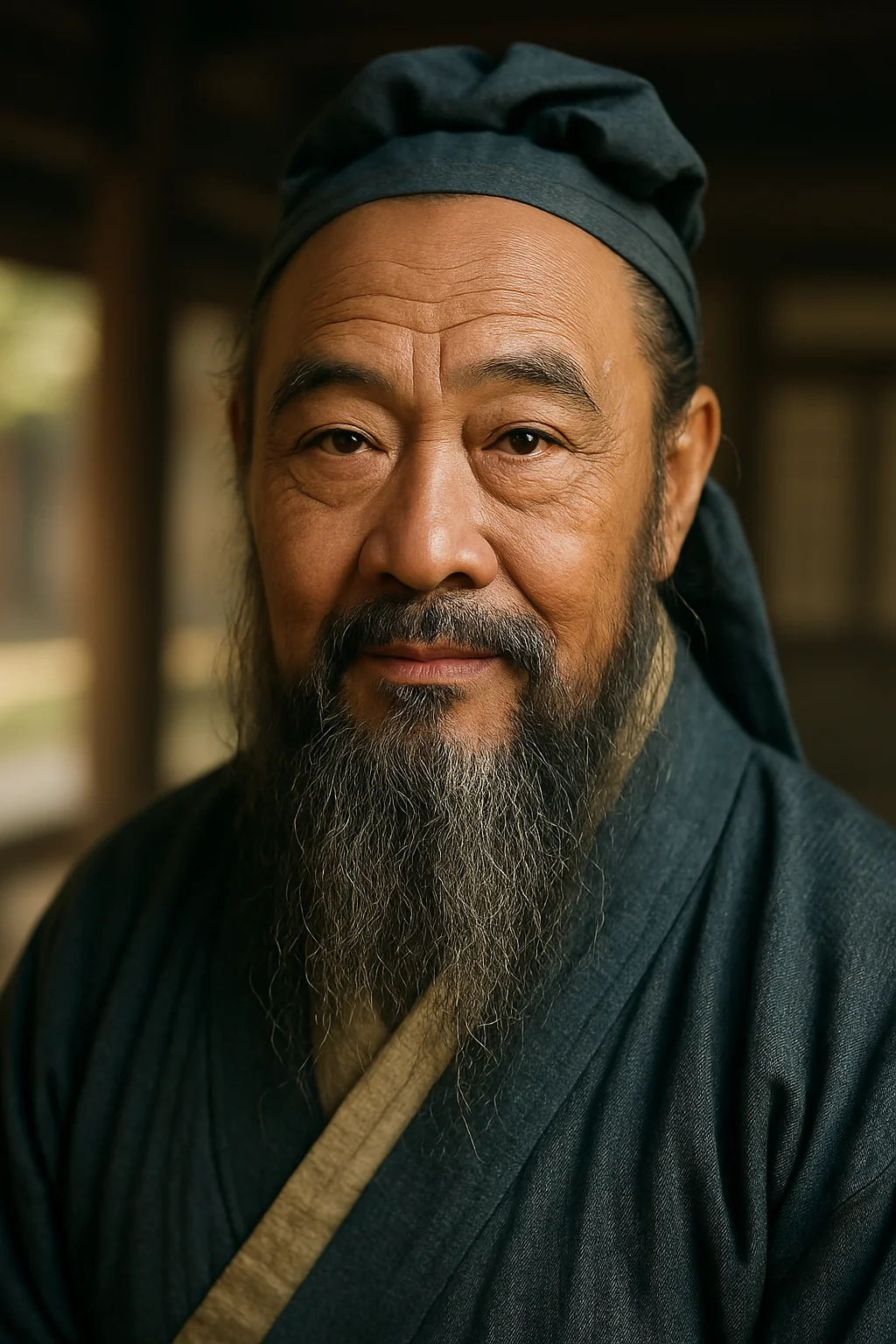
Confucius: Ancient China's Most Influential Philosopher-Teacher
Confucius (551-479 BCE) stands as one of history's most transformative intellectual figures, whose teachings fundamentally shaped East Asian civilization for over two millennia. As China's first private teacher, he revolutionized education by making knowledge accessible beyond the aristocratic class. His philosophical system, emphasizing moral cultivation, social harmony, and proper governance, became the foundation of Chinese imperial administration and continues to influence modern Asian societies. While best known for his ethical teachings, Confucius was also a skilled politician, music theorist, and educational reformer whose impact extends far beyond his often-quoted aphorisms. His relevance persists in contemporary discussions of leadership, education, and social responsibility.
Context & Background
Confucius lived during the Spring and Autumn Period (771-476 BCE), a time of profound social and political upheaval in ancient China. The once-mighty Zhou Dynasty had lost central control, leading to warfare between competing states and the breakdown of traditional social orders. The old aristocratic system was crumbling as new merchant classes rose to prominence, while technological innovations in agriculture and metallurgy transformed the economy. This period of chaos paradoxically created fertile ground for intellectual innovation, spawning the Hundred Schools of Thought.
In his home state of Lu, Confucius witnessed firsthand the consequences of poor governance and moral decay. The traditional ritual systems that had maintained social order for centuries were being abandoned in favor of raw power politics. This environment profoundly influenced his philosophical emphasis on moral leadership and social harmony through ritual propriety. His ideas emerged as a direct response to the political fragmentation and moral deterioration he observed, offering a path to restore order through ethical behavior and proper relationships.
The rise of a new educated class of shi (士) - scholars and officials who gained position through merit rather than birth - provided the social context for Confucius's revolutionary approach to education. His belief that virtue and learning should determine social status, rather than ancestry, reflected and accelerated this broader social transformation.
Confucius revolutionized Chinese education by establishing several groundbreaking principles that would influence pedagogy for millennia. His approach centered on the radical notion that education should be available to all men of talent, regardless of social class - a dramatic departure from the aristocratic monopoly on learning. He developed a comprehensive curriculum that integrated six arts: ritual, music, archery, charioteering, calligraphy, and mathematics, believing that well-rounded development was essential for moral character.
His teaching methods emphasized interactive dialogue and practical application over rote memorization. The Master would often use real-world situations and historical examples to illustrate principles, encouraging students to think critically and apply knowledge to actual circumstances. This approach was captured in the famous saying that he would "not open up the truth to one who is not eager to get knowledge, nor help out any one who is not anxious to explain himself."
The success of his educational model led to the establishment of private schools throughout China, creating a new class of educated individuals who would eventually form the backbone of the imperial bureaucracy.
At the heart of Confucius's political philosophy lay the concept of moral leadership through personal example. He believed that a ruler's moral character had more influence on society than laws or punishments. His ideal government would be led by junzi (君子) - moral exemplars who had cultivated themselves through study and ethical practice. This vision stemmed from his brief experience as a minister in Lu, where he observed how virtuous leadership could transform society.
Confucius promoted a hierarchical but reciprocal view of social relations, where authority figures had obligations to those below them, and subordinates had duties to their superiors. This system was designed to create social harmony through clearly defined roles and mutual responsibility. His emphasis on filial piety (xiao 孝) as the foundation of social order influenced Chinese family structure and governance for generations.
His political ideas gained widespread adoption during the Han Dynasty (206 BCE-220 CE), when Confucianism became state orthodoxy. This institutionalization of his teachings profoundly shaped Chinese political culture, establishing the examination system that would select government officials for nearly two thousand years.
Beyond his familiar image as a sage dispensing wisdom, Confucius was a passionate musician who saw music as essential to moral development. He was said to have been so moved by certain ancient melodies that he would not taste meat for three months afterward. His expertise in ritual music led him to preserve and transmit many ancient compositions that might otherwise have been lost.
Lesser-known aspects of his life include his early career as a warehouse manager and his skill at archery. Despite his later fame, he experienced significant hardships, including years of wandering between states seeking a ruler who would implement his ideas. During this period, he and his followers sometimes faced dangerous situations, including threats to their lives.
Confucius was also known for his sense of humor and could be self-deprecating. He once described himself as a transmitter rather than an innovator, though his interpretations of ancient wisdom were highly original. His personal life included a failed marriage, and historical records suggest he had a complex relationship with his only son.
Confucius Quotes
The Master said, A true gentleman is one who has set his heart upon the Way. A fellow who is ashamed merely of shabby clothing or modest meals is not even worth conversing with.
Life is really simple, but we insist on making it complicated.
You cannot open a book without learning something.
Music produces a kind of pleasure which human nature cannot do without.
The man of wisdom is never of two minds;
If you are the smartest person in the room, then you are in the wrong room.
The Master said, If your conduct is determined solely by considerations of profit you will arouse great resentment.
By nature, men are nearly alike; by practice, they get to be wide apart.
Fix your mind on truth, hold firm to virtue, rely on loving kindness, and find your recreation in the Arts.
To be wealthy and honored in an unjust society is a disgrace.
Don't do unto others what you don't want done unto you.
The beginning of wisdom is to call things by their proper name.
Consideration for others is the basis of a good life, a good society.
He who knows all the answers has not been asked all the questions.
Before you embark on a journey of revenge, dig two graves.
The funniest people are the saddest ones
Respect yourself and others will respect you.
When you see a good person, think of becoming like her/him. When you see someone not so good, reflect on your own weak points.
Attack the evil that is within yourself, rather than attacking the evil that is in others.
I hear and I forget. I see and I remember. I do and I understand.
We have two lives, and the second begins when we realize we only have one.
The hardest thing of all is to find a black cat in a dark room, especially if there is no cat.
The gem cannot be polished without friction, nor man perfected without trials.
Give a bowl of rice to a man and you will feed him for a day. Teach him how to grow his own rice and you will save his life.
The way out is through the door. Why is it that no one will use this method?
It is not the failure of others to appreciate your abilities that should trouble you, but rather your failure to appreciate theirs.
Only the wisest and stupidest of men never change.
It is more shameful to distrust our friends than to be deceived by them.
Never give a sword to a man who can't dance.
The nobler sort of man emphasizes the good qualities in others, and does not accentuate the bad. The inferior does.
roads were made for journeys not destinations
The Master said, A true teacher is one who, keeping the past alive, is also able to understand the present.
Worry not that no one knows you; seek to be worth knowing.
The strength of a nation derives from the integrity of the home.
If there is righteousness in the heart, there will be beauty in the character.
Those who know the TRUTH are not equal to those who love it.
When the wind blows,the grass bends.
If one should desire to know whether a kingdom is well governed, if its morals are good or bad, the quality of its music will furnish the answer.
Knowledge is merely brilliance in organization of ideas and not wisdom. The truly wise person goes beyond knowledge.
The Master said, The gentleman understands what is right, whereas the petty man understands profit.
And remember, no matter where you go, there you are.
If what one has to say is not better than silence, then one should keep silent.
Hold faithfulness and sincerity as first principles.
To put the world in order, we must first put the nation in order; to put the nation in order, we must first put the family in order; to put the family in order; we must first cultivate our personal life; we must first set our hearts right.
Forget injuries, never forget kindnesses.
When it is obvious that the goals cannot be reached, don't adjust the goals, adjust the action steps.
If your plan is for one year plant rice. If your plan is for ten years plant trees. If your plan is for one hundred years educate children.
A lion chased me up a tree, and I greatly enjoyed the view from the top.
To see what is right and not do it is the worst cowardice.
Education breeds confidence. Confidence breeds hope. Hope breeds peace.
When a wise man points at the moon the imbecile examines the finger.
Time flows away like the water in the river.
Don’t complain about the snow on your neighbor’s roof when your own doorstep is unclean.
He who conquers himself is the mightiest warrior.
Learning without thought is labour lost; thought without learning is perilous.
The Man who says he can, and the man who says he can not.. Are both correct
Without knowing the force of words, it is impossible to know more.
Tzu Chang asked Confucius about jen. Confucius said, "If you can practice these five things with all the people, you can be called jen."
Have no friends not equal to yourself.
By three methods we may learn wisdom: First, by reflection, which is noblest; Second, by imitation, which is easiest; and third by experience, which is the bitterest.
The superior man wishes to be slow in his speech and earnest in his conduct.
To govern is to correct. If you set an example by being correct, who would dare remain incorrect?
By three methods we may learn wisdom: by reflection, which is noblest; by imitation, which is easiest; and by experience, which is the bitterest.
If you make a mistake and do not correct it, this is called a mistake.
He who learns but does not think, is lost! He who thinks but does not learn is in great danger.
Everything has beauty, but not everyone sees it.
What you do not wish for yourself, do not do to others.
The man who moves a mountain begins by carrying away small stones.
Real knowledge is to know the extent of one's ignorance.
It does not matter how slowly you go as long as you do not stop.
Study the past if you would define the future.
The superior man is modest in his speech, but exceeds in his actions.
To be wronged is nothing, unless you continue to remember it.
When anger rises, think of the consequences.
Wheresoever you go, go with all your heart.
He who speaks without modesty will find it difficult to make his words good.
They must often change who would be constant in happiness or wisdom.
The superior man thinks always of virtue; the common man thinks of comfort.
To see what is right and not to do it is want of courage.
The superior man is distressed by his want of ability.
Learn as if you were not reaching your goal and as though you were scared of missing it.
When you know a thing, to hold that you know it; and when you do not know a thing, to allow that you do not know it - this is knowledge.
The superior man understands what is right; the inferior man understands what will sell.
Better a diamond with a flaw than a pebble without.
He who excels in study can follow an official career.
The superior man is satisfied and composed; the mean man is always full of distress.
Fine words and an insinuating appearance are seldom associated with true virtue.
The superior man acts before he speaks, and afterwards speaks according to his actions.
They who know the truth are not equal to those who love it.
The superior man does not set his mind either for anything, or against anything.
Learning without thought is labor lost; thought without learning is perilous.
The superior man is firm in the right way, and not merely firm.
In a country well governed, poverty is something to be ashamed of. In a country badly governed, wealth is something to be ashamed of.
The superior man makes the difficulty to be overcome his first interest; success only comes later.
When we see men of worth, we should think of equaling them; when we see men of a contrary character, we should turn inwards and examine ourselves.
The superior man examines his heart, that there may be nothing wrong there.
Without feelings of respect, what is there to distinguish men from beasts?
When you have faults, do not fear to abandon them.
The superior man is dignified, but does not wrangle.
A youth, when at home, should be filial and, abroad, respectful to his elders.