
Marcus Aurelius
Quotes & Wisdom
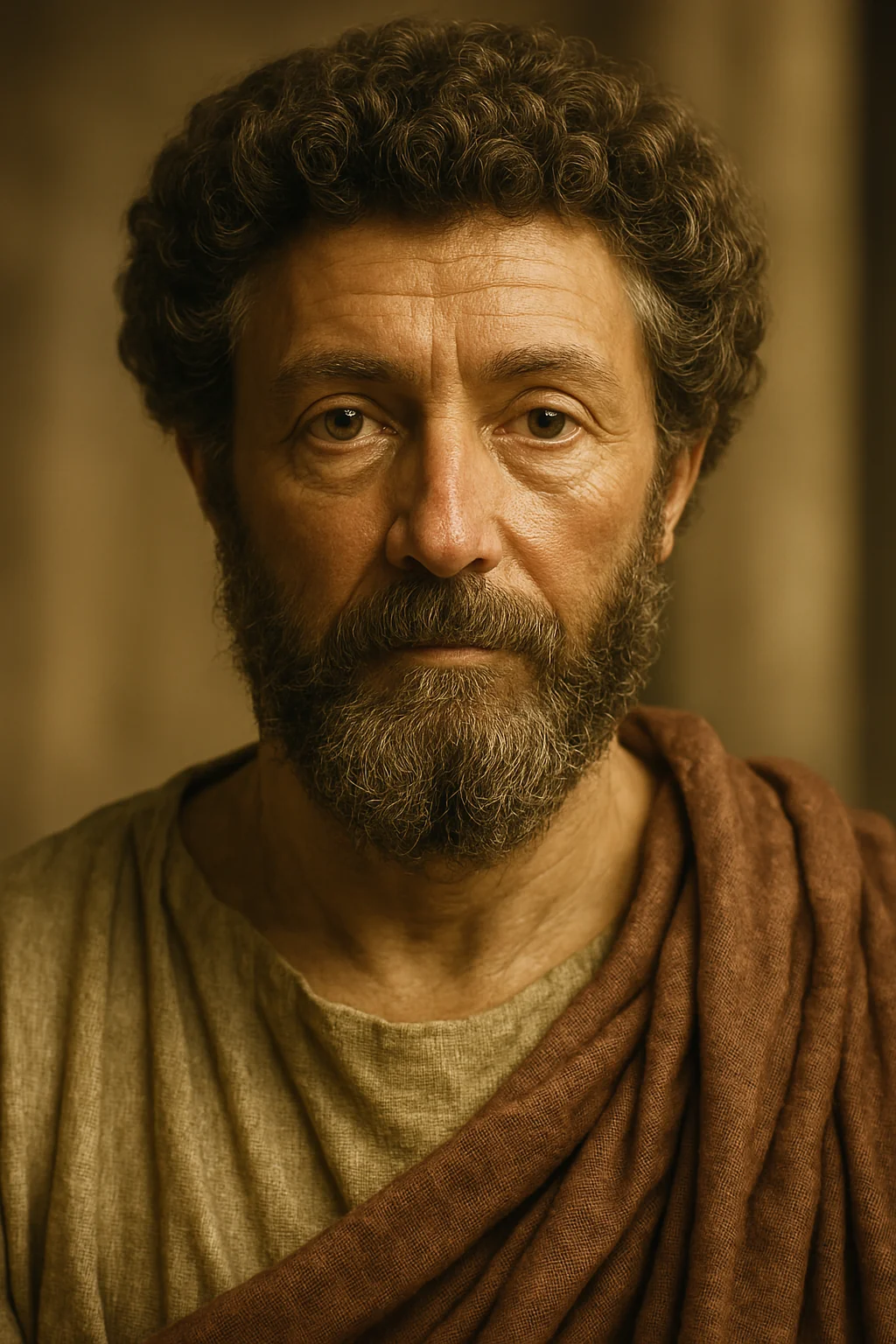
Marcus Aurelius: The Philosopher Emperor Who Mastered the Art of Living
At the height of Rome's power, one man embodied a striking paradox: the most powerful person in the known world who spent his nights writing intimate reflections on human frailty. Marcus Aurelius, the stoic emperor who ruled Rome from 161 to 180 CE, carried the weight of an empire on his shoulders while nurturing a profound inner life. Neither wholly philosopher nor merely emperor, Marcus transformed the potential contradiction of these roles into a harmonious whole. His personal writings—never intended for publication—reveal a leader constantly wrestling with the challenge of maintaining virtue amid chaos, power, and temptation. Today, his "Meditations" remains a wellspring of wisdom in our equally turbulent world, offering guidance on facing adversity, maintaining perspective, and finding tranquility through rational thought. As we explore the world that shaped him and the unique contours of his life and thought, we discover not just a historical figure, but a compelling model for ethical leadership and personal resilience across millennia.
Context & Background
Marcus Aurelius inherited a Roman Empire at its territorial apex—stretching from Scotland to the Persian Gulf, from the Atlantic to the Euphrates. Born in 121 CE during the reign of Emperor Hadrian, Marcus came of age during a period historians later termed the Pax Romana—the Roman Peace. This rare interval of relative stability followed centuries of conquest and preceded the tumultuous decline of empire. Rome enjoyed unprecedented prosperity, with a sophisticated network of roads, aqueducts, and public works binding together diverse peoples across three continents.
Yet beneath this veneer of order and opulence, profound tensions simmered. The republican ideals that had birthed Rome's greatness continued their long, slow collapse beneath the weight of imperial power. The position of emperor—officially styled as princeps or "first citizen" in a nod to republican sensibilities—had evolved into an increasingly absolute monarchy, with the Senate serving more as advisor than counterbalance. The sophisticated Romans of Marcus' era lived with this political contradiction, embracing imperial stability while nostalgically venerating their republican past.
Intellectually, Marcus matured in a cosmopolitan Rome where Greek philosophy had long since supplanted native Roman thought among the educated elite. Stoicism in particular had found fertile ground among Romans of the upper classes, with its emphasis on duty, virtue, and inner fortitude resonating with traditional Roman values. Epicureanism also flourished, alongside Platonism, Aristotelianism, and the mystery religions that percolated through the empire from the East. Christianity existed as a troublesome but still minor sect, viewed with suspicion by traditional Romans for its exclusivity and perceived subversiveness.
Marcus' privileged upbringing placed him at the crossroads of these intellectual currents. Orphaned early and raised in the household of his grandfather, he caught the attention of Emperor Hadrian, who arranged for his adoption by the future Emperor Antoninus Pius. This adoption placed Marcus on the path to imperial power, but it was his education that most profoundly shaped him. His tutors—including the renowned orator Fronto and the Stoic philosopher Rusticus—exposed him to the finest educational tradition of the Greco-Roman world. In Stoicism, with its emphasis on duty, rationality, and emotional resilience, Marcus discovered not merely a philosophy but a framework for navigating life's complexities.
Unlike many imperial figures who embraced luxury and indulgence, Marcus internalized these philosophical precepts, particularly the Stoic emphasis on virtue as the only true good. The world he inherited—prosperous yet precarious, powerful yet philosophically reflective—provided both the challenges and the tools that would define his reign and his enduring legacy.
Marcus Aurelius never sought the imperial purple. Unlike many who schemed and killed for Rome's highest office, the emperorship found him rather than the reverse. This reluctance was not merely rhetorical—a common posture of false modesty among Roman leaders—but genuine philosophical conviction. In his private writings, he repeatedly returns to the theme that power should be viewed not as a privilege but as a solemn obligation: "Do not act as if you were going to live ten thousand years. Death hangs over you. While you live, while it is in your power, be good."
This perspective transformed his approach to governance. Where previous emperors like Nero or Caligula viewed imperial authority as license for self-indulgence, Marcus approached it with the gravity of a sacred trust. His decisions—whether dispensing justice, managing the treasury, or directing military campaigns—were weighed against Stoic principles of virtue, duty, and the common good. Even his contemporaries noted the marked difference from his predecessors: he lived modestly, worked tirelessly, and maintained the same philosophical disciplines as emperor that he had practiced as a young man.
The irony of Marcus' rule lies in how consistently he was tested by circumstances that seemed designed to challenge his philosophical ideals. His reign witnessed a devastating plague (likely smallpox) that killed perhaps a third of the population in some provinces, depleting the imperial treasury and military manpower. Simultaneously, Rome's borders faced increasing pressure from Germanic tribes along the Danube frontier, forcing the peace-preferring emperor to spend much of his reign in military camps, directing campaigns to secure the empire's vulnerable boundaries.
Perhaps most poignantly, Marcus—who valued rational governance and merit—was succeeded by his biological son Commodus, who proved to be one of Rome's more disastrous emperors. This decision has puzzled historians: did the philosopher-emperor's paternal affection override his judgment, or did he genuinely believe Commodus could rise to the responsibility? This rare failure of foresight stands as a reminder that even the wisest leaders remain fallibly human.
Despite these challenges, Marcus maintained remarkable consistency between his private philosophy and public policies. He strengthened legal protections for the vulnerable, including slaves and orphans. When civil war threatened after the rebellion of Avidius Cassius in 175 CE, he responded with characteristic clemency rather than the brutal reprisals common in Roman politics. Even amid the pressures of constant warfare, he found time to engage with ordinary citizens, hearing legal cases and petitions with attentive patience that amazed his contemporaries.
"You have power over your mind—not outside events. Realize this, and you will find strength." This quintessential quote from Marcus' "Meditations" captures the core of how he integrated Stoic practice into both personal and imperial life. For Marcus, Stoicism was no abstract theory but a practical toolkit for navigating reality's complexities.
What distinguished Marcus from mere philosophical dilettantes was his rigorous daily practice. Even while campaigning along the empire's frigid northern frontiers, he maintained the Stoic discipline of morning and evening reflections—examining his anticipated challenges and his responses to them. The "Meditations" emerged from these reflections, written in Greek (the language of philosophy) rather than Latin (the language of imperial power). They reveal a mind constantly vigilant against ego, self-deception, and moral complacency.
The central Stoic conception that resonates throughout his writings is the dichotomy of control—the sharp distinction between what we can control (our judgments, intentions, and actions) and what we cannot (external events, others' opinions, natural processes). This principle became Marcus' anchor amid the chaos of plague, war, and political intrigue. "The happiness of your life depends upon the quality of your thoughts," he reminded himself, embodying the Stoic belief that external circumstances, however difficult, cannot diminish inner virtue.
What makes Marcus' philosophy particularly compelling is that it was forged in the crucible of immense responsibility and adversity. Unlike some philosophers who developed their ideas in relative tranquility, Marcus practiced Stoicism while making life-or-death decisions affecting millions. His was not the stoicism of detached ivory-tower contemplation but of engaged leadership under duress.
This lived dimension of his philosophy manifested in specific practices: he trained himself to view difficult people as learning opportunities rather than obstacles, to perceive setbacks as tests of character rather than misfortunes, and to contemplate his own mortality daily as a means of maintaining proper perspective. "Look back over the past, with its changing empires that rose and fell, and you can foresee the future too," he wrote, cultivating the cosmic perspective that contextualizes human struggles within the vast cycles of nature and time.
Perhaps most remarkably, Marcus maintained this philosophical discipline without the public recognition that might have reinforced it. Unlike Seneca or Cicero, who published philosophical works for acclaim, Marcus wrote privately, for himself alone. His "Meditations" survived by historical accident, not design. This private quality gives his writings their distinctive character—honest self-critique without posturing, wisdom without performative virtue.
The peculiar trajectory of Marcus Aurelius' legacy stands among history's more unusual paths to immortality. After his death in 180 CE, Rome remembered him primarily as a capable emperor rather than as a significant philosophical voice. His "Meditations"—the work for which he is now most renowned—remained largely unknown for centuries, a private journal never intended for publication.
The first millennium after his death saw Marcus honored in the traditional Roman manner: the Senate deified him (a standard practice for respected emperors), his image appeared on coins, and he entered the historical record through works like the "Historia Augusta" as one of the "Five Good Emperors." Yet his philosophical voice remained largely silent during this period, his personal reflections gathering dust in Byzantine libraries while more systematic philosophical works claimed attention.
The Renaissance marked the crucial turning point. When Marcus' "Meditations" was first printed in 1558, it entered a European intellectual landscape hungry for classical wisdom yet increasingly questioning traditional authorities. The work found immediate resonance among humanist thinkers who appreciated its emphasis on reason, virtue, and inner freedom. Michel de Montaigne, whose essays revolutionized Western thought, counted Marcus among his most significant influences, helping to establish the "Meditations" as essential reading for the intellectually curious.
Throughout subsequent centuries, Marcus' appeal crossed ideological divides in remarkable ways. During the Enlightenment, his rational approach to ethics attracted philosophers like Immanuel Kant. In the Victorian era, his emphasis on duty resonated with nineteenth-century values, making him a favorite of figures as diverse as Matthew Arnold and John Stuart Mill. The twentieth century brought renewed interest in Stoicism as a practical philosophy for troubled times, with Marcus' writings finding readers among prisoners of war, political leaders, and ordinary people seeking resilience amid chaos.
Today, Marcus enjoys perhaps his widest audience ever—a development that would likely have astonished the emperor himself. His "Meditations" sells hundreds of thousands of copies annually, has been translated into scores of languages, and frequently appears on leadership reading lists for executives and military officers. The very qualities that make the work unusual—its unsystematic nature, its focus on personal practice rather than theory, its sometimes repetitive self-reminders—have rendered it remarkably accessible to modern readers seeking philosophical wisdom without philosophical jargon.
This modern renaissance extends beyond purely intellectual spheres. Marcus has entered popular culture through films like "Gladiator" (which takes significant historical liberties but captures something of his temperament), countless leadership books, and even mindfulness applications that quote his insights on managing emotions and maintaining perspective. Organizations from corporations to military units study his approach to leadership under pressure, finding in his ancient wisdom remarkable relevance to contemporary challenges.
Beneath the marble busts and philosophical aphorisms lies a more complex Marcus than either Roman imperial propaganda or modern stoic enthusiasm typically portrays. This philosopher-emperor contained fascinating contradictions and human elements that add depth to our understanding of the man behind the meditations.
Despite his reputation for seriousness, Marcus possessed a lively sense of humor, particularly evident in his correspondence with his rhetoric teacher Fronto. These letters reveal a young Marcus who could be playful, affectionate, and self-deprecating—qualities rarely associated with the stern imperial image. He described his early attempts at rhetoric with mock grandiloquence and related amusing anecdotes from imperial life with an eye for the absurd. This humor never fully disappeared, occasionally surfacing even in the "Meditations" when he gently mocked human pretensions, including his own.
His personal habits revealed both discipline and quirks. Contemporary accounts mention his extraordinary capacity for work, often handling imperial correspondence before dawn. Yet this same disciplined emperor struggled with chronic health problems throughout his life—likely including a stomach ulcer and what modern physicians suspect was coronary artery disease. These physical challenges make his philosophical equanimity all the more remarkable, as he composed many of his most serene reflections while in considerable pain.
Marcus' marriage to Faustina the Younger has sparked centuries of historical debate. Roman sources after his death suggested she was unfaithful, even claiming that the gladiator Commodus fought against in the arena was actually his biological father. Modern historians largely dismiss these tales as politically motivated slander. Marcus himself expressed only gratitude and affection for Faustina in his writings, praising her "simplicity" and loyalty. Their union produced at least thirteen children—an extraordinary number suggesting genuine attachment, especially considering that elite Romans with purely political marriages typically stopped at the heir and the spare.
Among his lesser-known qualities was Marcus' deep interest in anatomy and medicine. He regularly consulted leading physicians like Galen and demonstrated unusual concern for medical care among his troops. This scientific curiosity extended to his Stoic practices—he approached emotions with almost clinical detachment, observing and analyzing his reactions with a physician's precision.
Perhaps most revealing is a small detail from his daily routine: despite his power and responsibilities, Marcus made time to read every day, often late into the night. His literary tastes were broad, from history and philosophy to poetry. He kept volumes of the playwright Menander near his bed, finding in comedy insights into human nature that complemented his philosophical studies. This commitment to continuous learning, even at the height of power, speaks volumes about the man who wrote that we should "be like the rocky headland on which the waves constantly break" yet never ceases its own nature.
Marcus Aurelius Quotes
I have often wondered how it is that every man loves himself more than all the rest of men, but yet sets less value on his own opinion of himself than on the opinion of others.
When you wake up in the morning, tell yourself: the people I deal with today will be meddling, ungrateful, arrogant, dishonest, jealous and surly. They are like this because they can't tell good from evil. But I have seen the beauty of good, and the ugliness of evil, and have recognized that the wrongdoer has a nature related to my own - not of the same blood and birth, but the same mind, and possessing a share of the divine. And so none of them can hurt me. No one can implicate me in ugliness. Nor can I feel angry at my relative, or hate him. We were born to work together like feet, hands and eyes, like the two rows of teeth, upper and lower. To obstruct each other is unnatural. To feel anger at someone, to turn your back on him: these are unnatural.
Live a good life. If there are gods and they are just, then they will not care how devout you have been, but will welcome you based on the virtues you have lived by. If there are gods, but unjust, then you should not want to worship them. If there are no gods, then you will be gone, but will have lived a noble life that will live on in the memories of your loved ones.
When another blames you or hates you, or people voice similar criticisms, go to their souls, penetrate inside and see what sort of people they are. You will realize that there is no need to be racked with anxiety that they should hold any particular opinion about you.
Think of yourself as dead. You have lived your life. Now, take what's left and live it properly. What doesn't transmit light creates its own darkness.
Dig within. Within is the wellspring of Good; and it is always ready to bubble up, if you just dig.
That which is really beautiful has no need of anything; not more than law, not more than truth, not more than benevolence or modesty.
Humans have come into being for the sake of each other, so either teach them, or learn to bear them.
Regain your senses, call yourself back, and once again wake up. Now that you realize that only dreams were troubling you, view this 'reality' as you view your dreams.
The happiness of those who want to be popular depends on others; the happiness of those who seek pleasure fluctuates with moods outside their control; but the happiness of the wise grows out of their own free acts.
Or is it your reputation that's bothering you? But look at how soon we're all forgotten. The abyss of endless time that swallows it all. The emptiness of those applauding hands. The people who praise us; how capricious they are, how arbitrary. And the tiny region it takes place. The whole earth a point in space - and most of it uninhabited.
You always own the option of having no opinion. There is never any need to get worked up or to trouble your soul about things you can't control. These things are not asking to be judged by you. Leave them alone.
Observe always that everything is the result of change, and get used to thinking that there is nothing Nature loves so well as to change existing forms and make new ones like them.
No one can lose either the past or the future - how could anyone be deprived of what he does not possess? ... It is only the present moment of which either stands to be deprived: and if this is all he has, he cannot lose what he does not have.
Do not disturb yourself by picturing your life as a whole; do not assemble in your mind the many and varied troubles which have come to you in the past and will come again in the future, but ask yourself with regard to every present difficulty: 'What is there in this that is unbearable and beyond endurance?' You would be ashamed to confess it! And then remind yourself that it is not the future or what has passed that afflicts you, but always the present, and the power of this is much diminished if you take it in isolation and call your mind to task if it thinks that it cannot stand up to it when taken on its own.
Pass then through this little space of time conformably to nature, and end thy journey in content, just as an olive falls off when it is ripe, blessing nature who produced it, and thanking the tree on which it grew.
Think of your many years of procrastination; how the gods have repeatedly granted you further periods of grace, of which you have taken no advantage. It is time now to realise the nature of the universe to which you belong, and of that controlling Power whose offspring you are; and to understand that your time has a limit set to it. Use it, then, to advance your enlightenment; or it will be gone, and never in your power again.
Is your cucumber bitter? Throw it away. Are there briars in your path? Turn aside. That is enough. Do not go on and say, "Why were things of this sort ever brought into this world?" neither intolerable nor everlasting - if thou bearest in mind that it has its limits, and if thou addest nothing to it in imagination. Pain is either an evil to the body (then let the body say what it thinks of it!)-or to the soul. But it is in the power of the soul to maintain its own serenity and tranquility. . . .
Do not indulge in dreams of having what you have not, but reckon up the chief of the blessings you do possess, and then thankfully remember how you would crave for them if they were not yours.
Never esteem anything as of advantage to you that will make you break your word or lose your self-respect.
It never ceases to amaze me: we all love ourselves more than other people, but care more about their opinion than our own.
It is in your power to withdraw yourself whenever you desire. Perfect tranquility within consists in the good ordering of the mind, the realm of your own.
Whatever anyone does or says, I must be emerald and keep my colour.
If you are distressed by anything external, the pain is not due to the thing itself, but to your estimate of it; and this you have the power to revoke at any moment.
When people injure you, ask yourself what good or harm they thought would come of it. If you understand that, you'll feel sympathy rather than outrage or anger. Your sense of good and evil may be the same as theirs, or near it, in which case you have to excuse them. Or your sense of good and evil may differ from theirs. In which case they're misguided and deserve your compassion. Is that so hard?
Concentrate every minute like a Roman— like a man— on doing what’s in front of you with precise and genuine seriousness, tenderly, willingly, with justice. And on freeing yourself from all other distractions. Yes, you can— if you do everything as if it were the last thing you were doing in your life, and stop being aimless, stop letting your emotions override what your mind tells you, stop being hypocritical, self-centered , irritable. You see how few things you have to do to live a satisfying and reverent life? If you can manage this, that’s all even the gods can ask of you.
Just that you do the right thing. The rest doesn't matter. Cold or warm. Tired or well-rested. Despised or honored. Dying...or busy with other assignments. Because dying, too, is one of our assignments in life. There as well: "To do what needs doing." Look inward. Don't let the true nature of anything elude you. Before long, all existing things will be transformed, to rise like smoke (assuming all things become one), or be dispersed in fragments...to move from one unselfish act to another with God in mind. Only there, delight and stillness...when jarred, unavoidably, by circumstances, revert at once to yourself, and don't lose the rhythm more than you can help. You'll have a better grasp of the harmony if you keep going back to it.
Dwell on the beauty of life. Watch the stars, and see yourself running with them.
Waste no more time arguing about what a good man should be. Be one.
The soul becomes dyed with the colour of its thoughts.
The best revenge is not to be like your enemy.
How much more grievous are the consequences of anger than the causes of it.
Here is a rule to remember in future, when anything tempts you to feel bitter: not "This is misfortune," but "To bear this worthily is good fortune.
Look well into thyself; there is a source of strength which will always spring up if thou wilt always look.
Take full account of what Excellencies you possess, and in gratitude remember how you would hanker after them, if you had them not.
Every living organism is fulfilled when it follows the right path for its own nature.
I was once a fortunate man but at some point fortune abandoned me.
When you arise in the moring, think of what a precious privelege it is to be alive-- to breathe, to think, to enjoy, to love
Do what you will. Even if you tear yourself apart, most people will continue doing the same things.
Though you break your heart, men will go on as before.
Choose not to be harmed—and you won’t feel harmed. Don’t feel harmed—and you haven’t been.
If you are pained by external things, it is not they that disturb you, but your own judgement of them. And it is in your power to wipe out that judgement now.
Because a thing seems difficult for you, do not think it impossible for anyone to accomplish.
Be like the cliff against which the waves continually break; but it stands firm and tames the fury of the water around it.
Misfortune nobly born is good fortune.
A man must stand erect, not be kept erect by others.
You are a little soul carrying about a corpse, as Epictetus used to say.
Do every act of your life as though it were the very last act of your life.
For it is in your power to retire into yourself whenever you choose.
Your days are numbered. Use them to throw open the windows of your soul to the sun. If you do not, the sun will soon set, and you with it.
A man’s worth is no greater than the worth of his ambitions.
Receive without conceit, release without struggle.
Don't go on discussing what a good person should be. Just be one.
If any man despises me, that is his problem. My only concern is not doing or saying anything deserving of contempt.
The things you think about determine the quality of your mind.
A person's worth is measured by the worth of what he values.
Life is neither good or evil, but only a place for good and evil.
The universe is change; our life is what our thoughts make it.
Waste no more time arguing what a good man should be. Be one.
Accept the things to which fate binds you, and love the people with whom fate brings you together, but do so with all your heart.
The best revenge is to be unlike him who performed the injury.
Everything we hear is an opinion, not a fact. Everything we see is a perspective, not the truth.
Very little is needed to make a happy life; it is all within yourself, in your way of thinking.
When you arise in the morning think of what a privilege it is to be alive, to think, to enjoy, to love.
You have power over your mind - not outside events. Realize this, and you will find strength.
If it is not right, do not do it; if it is not true, do not say it.
The soul becomes dyed with the color of its thoughts.
The happiness of your life depends upon the quality of your thoughts.
Receive without pride, let go without attachment.
Look within. Within is the fountain of good, and it will ever bubble up, if thou wilt ever dig.
What stands in the way becomes the way.
Do every act of your life as if it were your last.
The first rule is to keep an untroubled spirit. The second is to look things in the face and know them for what they are.
Never let the future disturb you. You will meet it, if you have to, with the same weapons of reason which today arm you against the present.
How much time he gains who does not look to see what his neighbor says or does or thinks.
The art of living is more like wrestling than dancing.
Do not act as if you were going to live ten thousand years. Death hangs over you.
Be tolerant with others and strict with yourself.
Reject your sense of injury and the injury itself disappears.
Our life is what our thoughts make it.
Everything that happens happens as it should, and if you observe carefully, you will find this to be so.
Begin each day by telling yourself: Today I shall be meeting with interference, ingratitude, insolence, disloyalty, ill-will, and selfishness.
The object of life is not to be on the side of the majority, but to escape finding oneself in the ranks of the insane.
Accept whatever comes to you woven in the pattern of your destiny, for what could more aptly fit your needs?
Look back over the past, with its changing empires that rose and fell, and you can foresee the future, too.
The impediment to action advances action. What stands in the way becomes the way.
If someone is able to show me that what I think or do is not right, I will happily change, for I seek the truth.
Remember that very little is needed to make a happy life.
Death smiles at us all, but all a man can do is smile back.
Nowhere can man find a quieter or more untroubled retreat than in his own soul.
The memory of everything is very soon overwhelmed in time.
Nothing has such power to broaden the mind as the ability to investigate systematically and truly all that comes under thy observation in life.
A man's worth is no greater than his ambitions.
Confine yourself to the present.
The opinion of 10,000 men is of no value if none of them know anything about the subject.
Each day provides its own gifts.
Life is neither good nor bad, but only a place for good and bad.
What we do now echoes in eternity.
The only wealth which you will keep forever is the wealth you have given away.
To live happily is an inward power of the soul.