
Sigmund Freud
Quotes & Wisdom
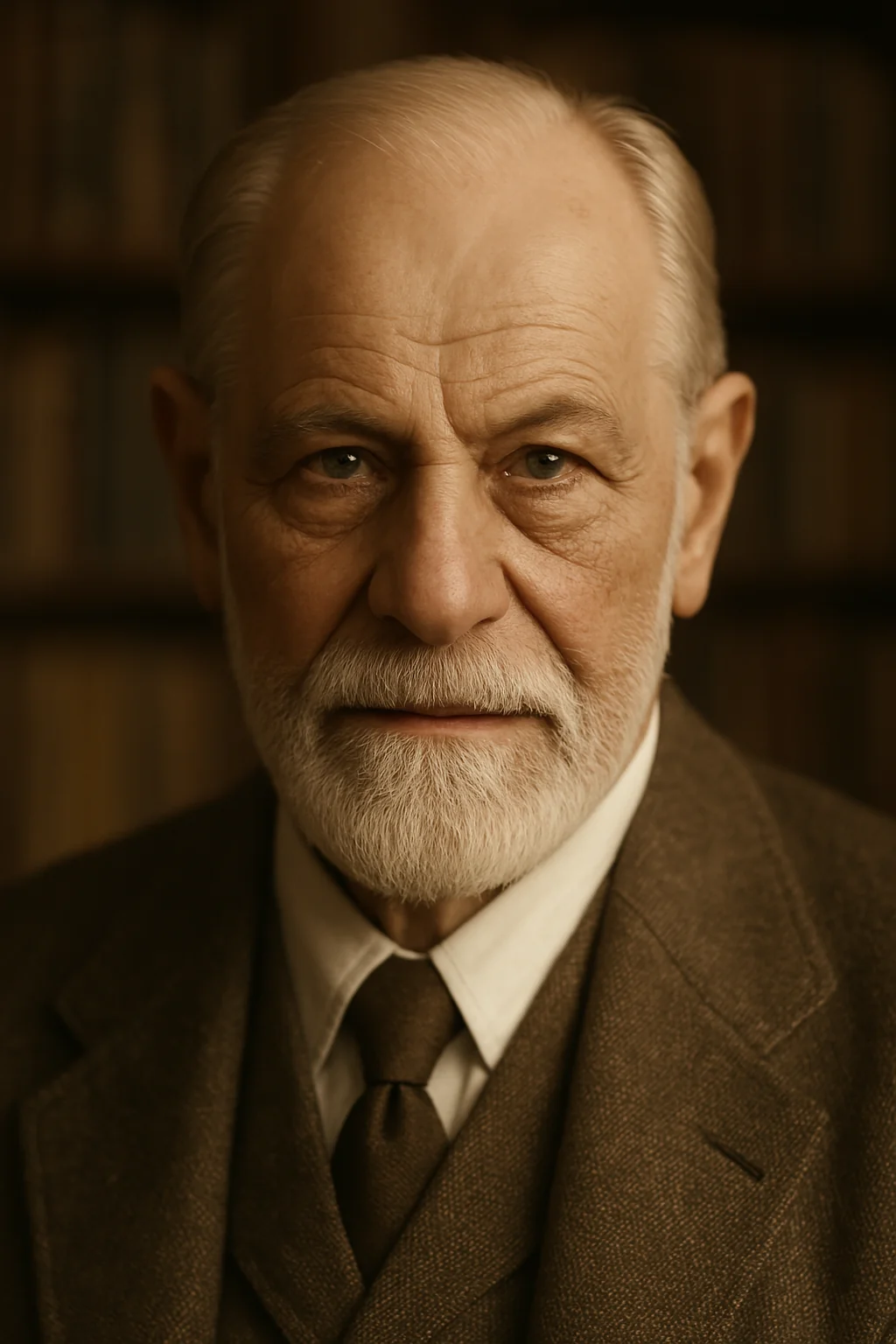
Sigmund Freud revolutionized how humanity understands itself, proposing that beneath our rational surface lurk unconscious desires, childhood traumas, and primal drives we barely comprehend. The Viennese neurologist transformed psychology from philosophical speculation into clinical practice, inventing psychoanalysis as both theory and therapy. His ideas - the Oedipus complex, repression, the id and ego, the interpretation of dreams - saturated twentieth-century culture even as scientists questioned their validity. Whether Freud discovered the unconscious or merely constructed a compelling mythology about it, his influence on how we think about thinking remains inescapable.
Context & Background
Sigismund Schlomo Freud was born on May 6, 1856, in Freiberg, Moravia (now Pribor, Czech Republic), to a Jewish wool merchant and his much younger third wife. The family moved to Vienna when Sigmund was four, and he would remain there for nearly eighty years, until the Nazi annexation forced his final exile.
Late nineteenth-century Vienna was a cultural hothouse - the city of Gustav Mahler, Gustav Klimt, and the young Ludwig Wittgenstein. The Habsburg Empire's twilight produced extraordinary artistic and intellectual ferment alongside political decay and rising antisemitism. As a Jew, Freud faced career limitations that pushed him toward the less prestigious field of nervous disorders.
The scientific landscape was transforming. Darwin's evolution had made humanity part of nature rather than apart from it. Neurologists were mapping the brain's physical structures. Yet mental illness remained mysterious - hysteria, obsessions, phobias seemed to have no clear organic cause. Freud trained as a neurologist, studied with the great Jean-Martin Charcot in Paris, and began practicing in Vienna in 1886.
His collaboration with Josef Breuer on hysterical patients, published as "Studies on Hysteria" (1895), launched his career. Breuer's patient "Anna O." seemed to improve by talking about her symptoms - the "talking cure" that would become psychoanalysis. But Freud pushed further than Breuer was willing to go, insisting that sexual conflicts lay at the root of neurosis.
Freud proposed that the mind operated on multiple levels. Beneath conscious awareness lay the preconscious (accessible with effort) and the unconscious (actively repressed, accessible only through dreams, slips, and symptoms). The unconscious contained wishes, memories, and conflicts too threatening for conscious acknowledgment.
Later, he developed the structural model: id (primitive drives seeking immediate gratification), ego (the rational self mediating between desire and reality), and superego (internalized moral standards, often harsh and punishing). Mental health required balance; neurosis resulted from the ego's inability to manage conflicts between id and superego.
The Oedipus complex became Freud's most controversial and influential idea. He proposed that every child experiences unconscious sexual desire for the opposite-sex parent and rivalry with the same-sex parent. Resolution of this complex shaped adult personality and sexuality. Critics found the theory unfalsifiable, universalized from limited evidence, and reflective of Freud's own patriarchal assumptions.
Dream interpretation provided the "royal road to the unconscious." Freud argued that dreams disguised forbidden wishes in symbolic form - the manifest content concealing latent meaning. His "Interpretation of Dreams" (1900), which he considered his masterpiece, offered both theory and method for decoding the mind's nighttime productions.
Freud built psychoanalysis into an international movement, gathering disciples who met weekly in Vienna before spreading across Europe and America. The inner circle included figures who would become famous in their own right: Carl Jung, Alfred Adler, Sandor Ferenczi, Ernest Jones.
These relationships often ended badly. Adler broke with Freud over the primacy of sexuality, developing his own psychology centered on power and inferiority. Jung's departure was more dramatic and more painful - the crown prince turned heretic, developing analytical psychology with its collective unconscious and archetypes. Freud experienced these defections as betrayals, evidence of the resistances his theory predicted.
The movement had characteristics of both scientific school and religious sect. Freud's authority was paramount; deviation meant excommunication. Training analysis - undergoing psychoanalysis oneself before practicing it - ensured doctrinal transmission. Critics saw cultish dynamics; defenders saw necessary quality control for a delicate therapeutic method.
Psychoanalysis spread to America with particular success. Freud visited in 1909 (famously remarking that he was bringing "the plague"), and American enthusiasts made psychoanalysis respectable, prosperous, and eventually diluted. The European refugees fleeing Nazism brought a second wave of analysts who dominated American psychiatry for decades.
Freud's later writings extended psychoanalytic concepts to culture, religion, and civilization itself. "Totem and Taboo" (1913) proposed that human society originated in a primal murder - sons killing and eating their tyrannical father, then creating religion from guilt. "The Future of an Illusion" (1927) analyzed religion as wish-fulfillment, a cosmic father-figure providing the comfort human fathers cannot.
"Civilization and Its Discontents" (1930) offered Freud's darkest vision. Civilization requires the repression of instincts - aggression and sexuality - creating permanent dissatisfaction. We trade happiness for security, eros for order. The death drive (Thanatos), which Freud posited after World War I, ensures that aggression turned inward or outward will forever threaten human achievements.
These cultural writings remain Freud's most readable works, free of clinical jargon, grappling with questions that extend beyond the consulting room. Whether they constitute science, philosophy, or speculation, they offer a tragic vision of human existence constrained by its own nature.
Freud was a compulsive writer, producing over twenty volumes of collected works. His German prose earned praise for its clarity and literary quality; he received the Goethe Prize for literature in 1930. The case histories read like detective stories - the Rat Man, the Wolf Man, Little Hans - combining clinical detail with narrative suspense.
He smoked twenty cigars daily despite developing oral cancer in 1923. Over sixteen years, he underwent thirty-three operations while continuing to work. His jaw was replaced with a prosthesis that made eating and speaking difficult. He refused painkillers that might cloud his thinking until the very end.
His collections of antiquities filled his consulting room - Egyptian, Greek, Roman artifacts crowding every surface. Patients lay on the famous couch surrounded by these objects, perhaps unconsciously connecting their own archaeological excavation of memory to literal archaeology. The collection accompanied him to London when he fled Vienna in 1938.
He died on September 23, 1939, in Hampstead, London, shortly after the war began. His physician administered a fatal dose of morphine at Freud's request - a final act of rational control over his own ending. His ashes rest in an ancient Greek urn at Golders Green Crematorium, surrounded by the classical civilization whose myths he had used to name humanity's deepest conflicts.
Sigmund Freud Quotes
Most people do not really want freedom, because freedom involves responsibility, and most people are frightened of responsibility.
Where does a thought go when it's forgotten?
In so doing, the idea forces itself upon him that religion is comparable to a childhood neurosis, and he is optimistic enough to suppose that mankind will surmount this neurotic phase, just as so many children grow out of their similar neurosis.
Religion is a system of wishful illusions together with a disavowal of reality, such as we find nowhere else but in a state of blissful hallucinatory confusion. Religion's eleventh commandment is "Thou shalt not question.
He that has eyes to see and ears to hear may convince himself that no mortal can keep a secret. If his lips are silent, he chatters with his fingertips; betrayal oozes out of him at every pore.
Life, as we find it, is too hard for us; it brings us too many pains, disappointments and impossible tasks. In order to bear it we cannot dispense with palliative measures... There are perhaps three such measures: powerful deflections, which cause us to make light of our misery; substitutive satisfactions, which diminish it; and intoxicating substances, which make us insensible to it.
Neurotics complain of their illness, but they make the most of it, and when it comes to taking it away from them they will defend it like a lioness her young.
He does not believe that does not live according to his belief.
When making a decision of minor importance, I have always found it advantageous to consider all the pros and cons. In vital matters, however, such as the choice of a mate or a profession, the decision should come from the unconscious, from somewhere within ourselves. In the important decisions of personal life, we should be governed, I think, by the deep inner needs of our nature.
Properly speaking, the unconscious is the real psychic; its inner nature is just as unknown to us as the reality of the external world, and it is just as imperfectly reported to us through the data of consciousness as is the external world through the indications of our sensory organs.
What progress we are making. In the Middle Ages they would have burned me. Now they are content with burning my books.
Where id is, there shall ego be
we are threatened with suffering from three directions: from our body, which is doomed to decay..., from the external world which may rage against us with overwhelming and merciless force of destruction, and finally from our relations with other men... This last source is perhaps more painful to use than any other. (p77)
Being entirely honest with oneself is a good exercise.
Unexpressed emotions will never die. They are buried alive and will come forth later in uglier ways.
We are never so defenseless against suffering as when we love.
Out of your vulnerabilities will come your strength.
Everywhere I go I find a poet has been there before me.
In the depths of my heart I can’t help being convinced that my dear fellow-men, with a few exceptions, are worthless.
Immorality, no less than morality, has at all times found support in religion.
The madman is a dreamer awake
The virtuous man contents himself with dreaming that which the wicked man does in actual life.
Religion is an illusion and it derives its strength from the fact that it falls in with our instinctual desires.
The behavior of a human being in sexual matters is often a prototype for the whole of his other modes of reaction in life.
Where the questions of religion are concerned people are guilty of every possible kind of insincerity and intellectual misdemeanor.
America is a mistake, a giant mistake.
Beauty has no obvious use; nor is there any clear cultural necessity for it. Yet civilization could not do without it.
Men are more moral than they think and far more immoral than they can imagine.
Love and work are the cornerstones of our humanness.
The creative writer does the same as the child at play; he creates a world of fantasy which he takes very seriously.
The more the fruits of knowledge become accessible to men, the more widespread is the decline of religious belief.
The interpretation of Dreams is the royal road to a knowledge of the unconscious activities of the mind
Loneliness and darkness have just robbed me of my valuables.
A man should not strive to eliminate his complexes but to get into accord with them: they are legitimately what directs his conduct in the world.
When a love-relationship is at its height there is no room left for any interest in the environment; a pair of lovers are sufficient to themselves
Poets are masters of us ordinary men, in knowledge of the mind,
How bold one gets when one is sure of being loved
“Everyone owes nature a death.”
“Human beings are funny. They long to be with the person they love but refuse to admit openly. Some are afraid to show even the slightest sign of affection because of fear. Fear that their feelings may not be recognized, or even worst, returned. But one thing about human beings puzzles me the most is their conscious effort to be connected with the object of their affection even if it kills them slowly within.”
“Observe the difference between your attitude to illusions and mine. You have to defend the religious illusion with all your might. If it becomes discredited - and indeed the threat to it is great enough - then your world collapses. There is nothing left for you but to despair of everything, of civilization and the future of mankind. From that bondage I am, we are, free. Since we are prepared to renounce a good part of our infantile wishes, we can bear it if a few of our expectations turn out to be illusions.”
“Actually, the substitution of the reality-principle for the pleasure-principle denotes no dethronement of the pleasure-principle, but only a safeguarding of it. A momentary pleasure, uncertain in its results, is given up, but only in order to gain in the new way an assured pleasure coming later. But the end psychic impression made by this substitution has been so powerful that it is mirrored in a special religious myth. The doctrine of reward in a future life for the—voluntary or enforced—renunciation of earthly lusts is nothing but a mythical projection of this revolution in the mind. In logical pursuit of this prototype, religions have been able to effect the absolute renunciation of pleasure in this life by means of the promise of compensation in a future life; they have not, however, achieved a conquest of the pleasure-principle this way. It is science which comes nearest to succeeding in this conquest; science, however, also offers intellectual pleasure during its work and promises practical gain at the end.”
“The view is often defended that sciences should be built up on clear and sharply defined basal concepts. In actual fact no science, not even the most exact, begins with such definitions. The true beginning of scientific activity consists rather in describing phenomena and then in proceeding to group, classify and correlate them.”
“No other technique for the conduct of life attaches the individual so firmly to reality as laying emphasis on work; for his work at least gives him a secure place in a portion of reality, in the human community. The possibility it offers of displacing a large amount of libidinal components, whether narcissistic, aggressive or even erotic, on to professional work and on to the human relations connected with it lends it a value by no means second to what it enjoys as something indispensible to the preservation and justification of existence in society. Professional activity is a source of special satisfaction if it is a freely chosen one — if, that is to say, by means of sublimation, it makes possible the use of existing inclinations, of persisting or constitutionally reinforced instinctual impulses. And yet, as a path to happiness, work is not highly prized by men. They do not strive after it as they do after other possibilities of satisfaction. The great majority of people only work under the stress of necessity, and this natural human aversion to work raises most difficult social problems.”
“Religion is an attempt to get control over the sensory world, in which we are placed, by means of the wish-world, which we have developed inside us as a result of biological and psychological necessities. But it cannot achieve its end. Its doctrines carry with them the stamp of the times in which they originated, the ignorant childhood days of the human race. Its consolations deserve no trust. Experience teaches us that the world is not a nursery. The ethical commands, to which religion seeks to lend its weight, require some other foundations instead, for human society cannot do without them, and it is dangerous to link up obedience to them with religious belief. If one attempts to assign to religion its place in man’s evolution, it seems not so much to be a lasting acquisition, as a parallel to the neurosis which the civilized individual must pass through on his way from childhood to maturity.”
“A woman should soften but not weaken a man.”
“It is impossible to escape the impression that people commonly use false standards of measurement — that they seek power, success and wealth for themselves and admire them in others, and that they underestimate what is of true value in life.”
“We believe that it is possible for scientific work to gain some knowledge about the reality of the world, by means of which we can increase out power and in accordance with which we can arrange our life. If this belief is an illusion, then we are in the same position as you. But science has given us evidence by its numerous and important successes that it is no illusion.”
“Religious doctrines … are all illusions, they do not admit of proof, and no one can be compelled to consider them as true or to believe in them.”
“Dream's evanescence, the way in which, on awakening, our thoughts thrust it aside as something bizarre, and our reminiscences mutilating or rejecting it—all these and many other problems have for many hundred years demanded answers which up till now could never have been satisfactory.”
“Our possibilities of happiness are already restricted by our constitution. Unhappiness is much less difficult to experience. We are threatened with suffering from three directions: from our own body, which is doomed to decay and dissolution and which cannot even do without pain and anxiety as warning signals; from the external world, which may rage against us with overwhelming and merciless forces of destruction; and finally from our relations to other men. The suffering which comes from this last source is perhaps more painful to us than any other.”
“Perhaps the hopes I have confessed to are of an illusory nature, too. But I hold fast to one distinction. Apart from the fact that no penalty is imposed for not sharing them, my illusions are not, like religious ones, incapable of correction.”
“Civilized society is perpetually menaced with disintegration through this primary hostility of men towards one another.”
“My love is something valuable to me which I ought not to throw away without reflection.”
“One day, in retrospect, the years of struggle will strike you as the most beautiful.”
“It sounds like a fairy-tale, but not only that; this story of what man by his science and practical inventions has achieved on this earth, where he first appeared as a weakly member of the animal kingdom, and on which each individual of his species must ever again appear as a helpless infant... is a direct fulfilment of all, or of most, of the dearest wishes in his fairy-tales. All these possessions he has acquired through culture. Long ago he formed an ideal conception of omnipotence and omniscience which he embodied in his gods. Whatever seemed unattainable to his desires - or forbidden to him - he attributed to these gods. One may say, therefore, that these gods were the ideals of his culture. Now he has himself approached very near to realizing this ideal, he has nearly become a god himself. But only, it is true, in the way that ideals are usually realized in the general experience of humanity. Not completely; in some respects not at all, in others only by halves. Man has become a god by means of artificial limbs, so to speak, quite magnificent when equipped with all his accessory organs; but they do not grow on him and they still give him trouble at times... Future ages will produce further great advances in this realm of culture, probably inconceivable now, and will increase man's likeness to a god still more.”
“No, our science is no illusion. But an illusion it would be to suppose that what science cannot give us we can get elsewhere.”
“It is that we are never so defenseless against suffering as when we love, never so helplessly unhappy as when we have lost our loved object or its love.”
“The intention that man should be happy is not in the plan of Creation.”
“Whoever loves becomes humble. Those who love have , so to speak , pawned a part of their narcissism.”