
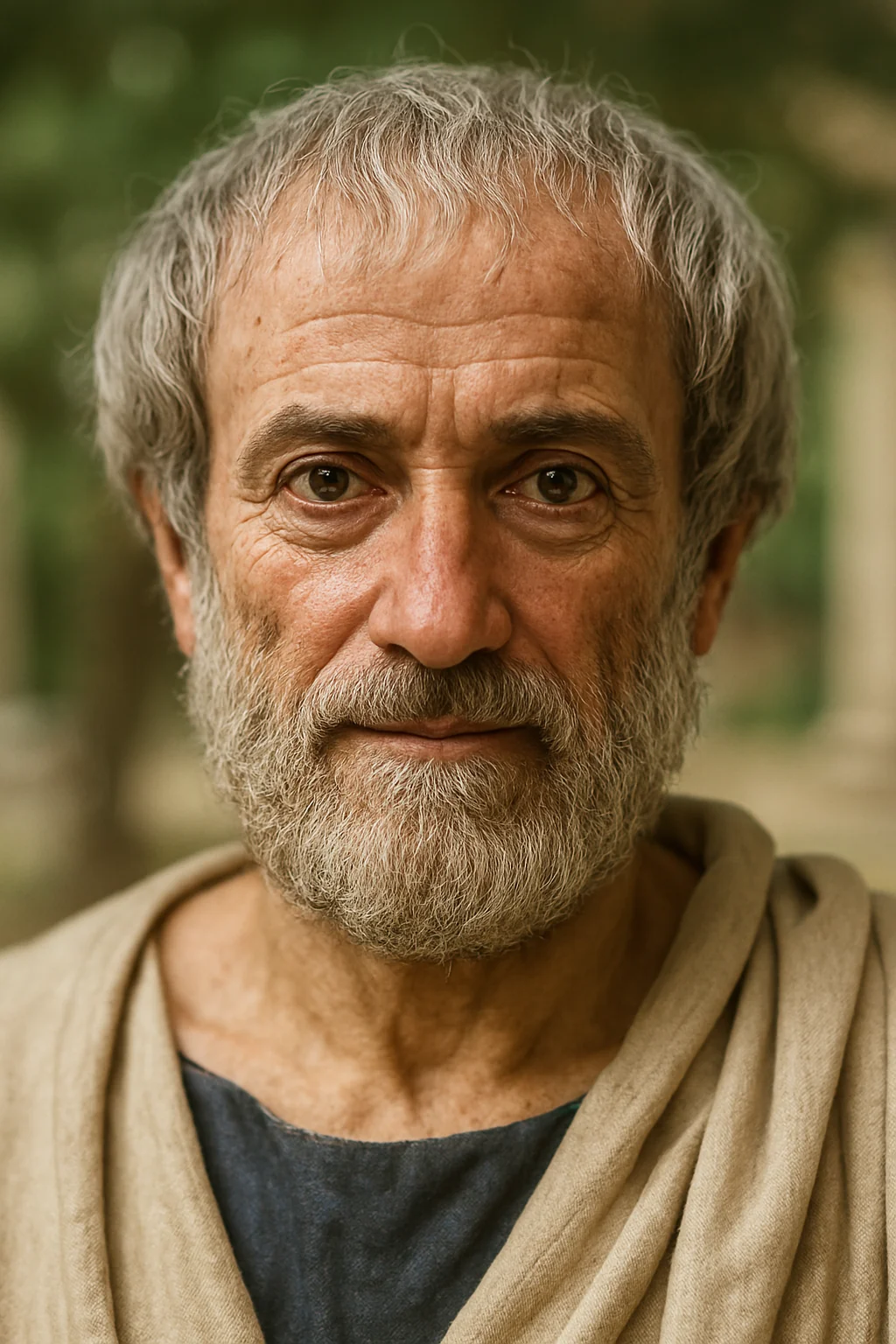
"“The void is 'not-being,' and no part of 'what is' is a 'not-being,'; for what 'is' in the strict sense of the term is an absolute plenum. This plenum, however, is not 'one': on the contrary, it is a 'many' infinite in number and invisible owing to the minuteness of their bulk.”"
The Void Is Not Being And No Part Of What Is Is A
“The void is 'not-being,' and no part of 'what is' is a 'not-being,'; for what 'is' in the strict sense of the term is an absolute plenum. This plenum, however, is not 'one': on the contrary, it is a 'many' infinite in number and invisible owing to the minuteness of their bulk.”
Similar Quotes
"“That which has died falls not out of the universe. If it stays here, it also changes here, and is dissolved into its proper parts, which are elements of the universe and of thyself. And these too change, and they murmur not".”"
"“Logic is the art of non-contradictory identification. A contradiction cannot exist. No concept man forms is valid unless he integrates it without contradiction into the total sum of his knowledge. To arrive at a contradiction is to confess an error in one’s thinking; to maintain a contradiction is to abdicate one’s mind and to evict oneself from the realm of reality”"
"“I [am] obliged to recur ultimately to my habitual anodyne, "I feel: therefore I exist." I feel bodies which are not myself: there are other existencies then. I call them "matter". I feel them changing place. This gives me "motion". Where there is an absence of matter, I call it "void", or "nothing", or "immaterial space". On the basis of sensation, of matter and motion, we may erect the fabric of all the certainties we can have or need.”"
"“Truth at last cannot be hidden. Dissimulation is of no avail. Dissimulation is to no purpose before so great a judge. Falsehood puts on a mask. Nothing is hidden under the sun.”"
"“There are trivial truths and there are great truths. The opposite of a trivial truth is plainly false. The opposite of a great truth is also true.”"
"“Thinking is man’s only basic virtue, from which all the others proceed. And his basic vice, the source of all his evils, is that nameless act which all of you practice, but struggle never to admit: the act of blanking out, the willful suspension of one’s consciousness, the refusal to think - not blindness, but the refusal to see; not ignorance, but the refusal to know. It is the act of unfocusing your mind and inducing an inner fog to escape the responsibility of judgment - on the unstated premise that a thing will not exist if only you refuse to identify it, that A will not be A so long as you do not pronounce the verdict ‘It is.”"