
Seneca
Quotes & Wisdom
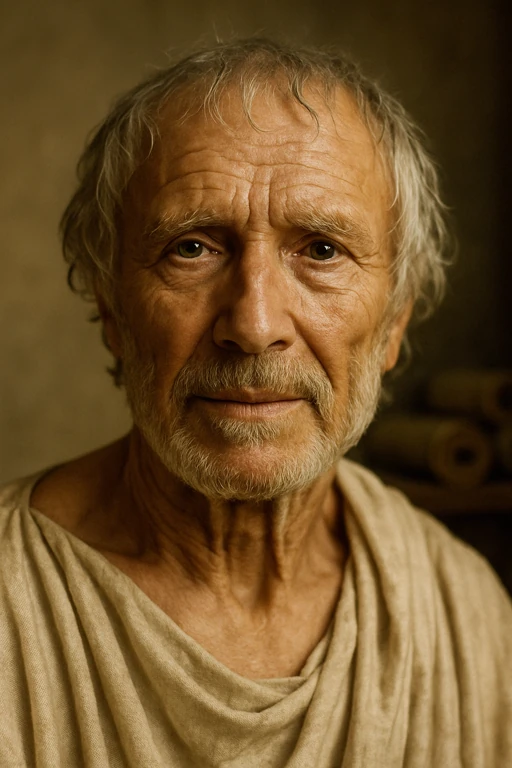
Lucius Annaeus Seneca: Stoic Sage in a Turbulent Empire
Few figures embody the paradoxes of power and principle quite like Seneca. A Roman philosopher, playwright, and statesman of the 1st century CE, Seneca lived at the volatile intersection of Stoic ideals and imperial politics. As tutor and advisor to Emperor Nero, he wielded immense influence—yet his writings often speak of simplicity, virtue, and inner freedom. This tension between worldly entanglement and philosophical detachment forms the heart of his story.
Seneca's blend of moral introspection, sharp rhetoric, and psychological acuity still resonates, especially in an age grappling with burnout, ethical leadership, and resilience. His letters and essays offer tools not just for survival, but for serenity amid chaos.
In this profile, we'll explore the Roman world that forged Seneca's Stoicism, the personal contradictions that shadowed his life, the literary brilliance that carried his voice through the centuries, and the enduring appeal of his practical wisdom.
Context & Background
Born around 4 BCE in Corduba (modern-day Córdoba, Spain), Seneca came of age in the early Roman Empire during a period of consolidation following decades of civil war. Augustus had just transformed the crumbling Republic into a tightly controlled autocracy. By the time Seneca was active in politics, emperors like Caligula and Claudius embodied both the grandeur and peril of centralized power.
Seneca's father, Seneca the Elder, was a rhetorician who moved the family to Rome, ensuring his son received elite education in grammar, rhetoric, and philosophy. Stoicism, imported from Greece and adapted for Roman sensibilities, became the guiding framework of Seneca's intellectual life. This philosophy emphasized rational control over emotion, alignment with nature, and the pursuit of virtue over external success.
But Stoicism in Rome wasn't just theoretical—it was a toolkit for navigating a dangerous world. With emperors prone to paranoia and brutality, being too honest or too popular could mean death. The philosopher had to walk a tightrope between truth and survival.
Seneca's formative years also coincided with growing tensions between traditional Roman values and Hellenistic influences. As imperial wealth expanded, so did moral anxiety over luxury, ambition, and decadence—concerns that surface again and again in Seneca's writings.
Seneca's most famous works are his moral essays and 124 letters to Lucilius, composed later in life while semi-retired. These letters—half correspondence, half philosophical treatise—address anxiety, wealth, grief, anger, and the pursuit of peace. Written in a warm, direct style, they offer solace and guidance without ever feeling preachy.
His emphasis on short, memorable aphorisms helped popularize Stoicism for generations. Phrases like "We suffer more often in imagination than in reality" capture the spirit of cognitive reframing and emotional regulation long before modern psychology did.
The letters also reflect Seneca's own struggles. He was not a cloistered sage but a man who had courted imperial favor, grown fabulously wealthy, and navigated the treacherous politics of Nero's court. His writings often wrestle with hypocrisy, compromise, and the gap between ideal and reality.
This self-awareness gives his work lasting relevance. Seneca doesn't offer abstract perfection—he models a philosophy lived amid contradiction.
Seneca's political career reached its apex when he became tutor—and later advisor—to the young Emperor Nero. For several years, he was credited with steering Nero toward a more balanced rule. He co-authored early speeches and tried to instill a Stoic sense of duty.
Yet as Nero's reign grew more violent and erratic, Seneca's position became morally untenable. While he attempted to retire, Nero refused. Ultimately, Seneca was implicated in the Pisonian conspiracy to assassinate Nero—a charge whose legitimacy remains debated. Ordered to take his own life in 65 CE, Seneca died in the Roman tradition of stoic suicide.
His involvement with Nero remains the most contested aspect of his legacy. Was he a principled advisor trying to restrain a tyrant—or a compromised intellectual who accepted luxury and power while espousing simplicity?
The truth may be both. Seneca's life suggests the limits of philosophy when confronted with raw power. It also underlines a theme in his writing: that virtue is a struggle, not a state.
Beyond essays and letters, Seneca was a prolific playwright. His tragedies, written in Latin and modeled on Greek originals, dealt with themes of vengeance, fate, madness, and the psychological disintegration of power—eerily prescient given his political entanglements.
His dramatic works, including Phaedra, Thyestes, and Medea, were more rhetorical than performative, likely intended for recitation rather than stage. Yet they had a profound influence on Renaissance and Elizabethan drama, especially on writers like Shakespeare.
Seneca's use of intense soliloquies and moral conflict foreshadowed the inner turmoil that later Western literature would explore. His tragedies echo the dark grandeur of the world he inhabited, making him not just a moralist, but a dramatist of the human condition.
Seneca was a vegetarian, believing in the kinship of all living beings—a position unusual in Roman society and perhaps tied to his Stoic beliefs about nature and restraint. He also had frequent health issues, including bouts of asthma so severe he reportedly viewed them as practice for death.
His relationship with his wife, Pompeia Paulina, is remembered for her loyalty: when Seneca was ordered to die, she attempted to join him in suicide, only surviving after imperial reprieve.
Despite his immense wealth—including sprawling estates and luxury villas—he frequently condemned extravagance. This paradox was not lost on critics, ancient or modern. Yet Seneca addressed it directly in his writings, arguing that it is not possession, but dependence on wealth, that corrupts.
He also had a keen interest in natural science. His treatise Natural Questions examined phenomena from comets to earthquakes, blending empirical curiosity with metaphysical reflection. This lesser-known work reveals a mind eager to reconcile Stoicism with the expanding Roman worldview.
Ultimately, Seneca remains compelling not because he was flawless, but because he was flawed—and conscious of those flaws. He invites us not to follow a saint, but to walk alongside a fellow struggler in search of wisdom.
Seneca Quotes
It is the power of the mind to be unconquerable.
Non est ad astra mollis e terris via" - "There is no easy way from the earth to the stars
Until we have begun to go without them, we fail to realize how unnecessary many things are. We've been using them not because we needed them but because we had them.
Putting things off is the biggest waste of life: it snatches away each day as it comes, and denies us the present by promising the future. The greatest obstacle to living is expectancy, which hangs upon tomorrow, and loses today. You are arranging what lies in Fortune's control, and abandoning what lies in yours. What are you looking at? To what goal are you straining? The whole future lies in uncertainty: live immediately.
Regard [a friend] as loyal, and you will make him loyal.
Limiting one’s desires actually helps to cure one of fear. ‘Cease to hope … and you will cease to fear.’ … Widely different [as fear and hope] are, the two of them march in unison like a prisoner and the escort he is handcuffed to. Fear keeps pace with hope … both belong to a mind in suspense, to a mind in a state of anxiety through looking into the future. Both are mainly due to projecting our thoughts far ahead of us instead of adapting ourselves to the present.
You live as if you were destined to live forever, no thought of your frailty ever enters your head, of how much time has already gone by you take no heed. You squander time as if you drew from a full and abundant supply, though all the while that day which you bestow on some person or thing is perhaps your last.
It's not because things are difficult that we dare not venture. It's because we dare not venture that they are difficult.
Nothing is burdensome if taken lightly, and nothing need arouse one's irritation so long as one doesn't make it bigger than it is by getting irritated.
It is a rough road that leads to the heights of greatness.
The mind that is anxious about future events is miserable.
Nothing, to my way of thinking, is a better proof of a well ordered mind than a man’s ability to stop just where he is and pass some time in his own company.
It is not that we have a short time to live, but that we waste a lot of it. Life is long enough, and a sufficiently generous amount has been given to us for the highest achievements if it were all well invested. But when it is wasted in heedless luxury and spent on no good activity, we are forced at last by death’s final constraint to realize that it has passed away before we knew it was passing. So it is: we are not given a short life but we make it short, and we are not ill-supplied but wasteful of it… Life is long if you know how to use it.
People are frugal in guarding their personal property; but as soon as it comes to squandering time they are most wasteful of the one thing in which it is right to be stingy.
For what prevents us from saying that the happy life is to have a mind that is free, lofty, fearless and steadfast - a mind that is placed beyond the reach of fear, beyond the reach of desire, that counts virtue the only good, baseness the only evil, and all else but a worthless mass of things, which come and go without increasing or diminishing the highest good, and neither subtract any part from the happy life nor add any part to it?
A sword never kills anybody; it is a tool in the killer's hand.
We learn not in the school, but in life.
Withdraw into yourself, as far as you can. Associate with those who will make a better man of you. Welcome those whom you yourself can improve. The process is mutual; for men learn while they teach.
Difficulties strengthen the mind, as labor does the body.
If a man knows not to which port he sails, no wind is favorable.
Hang on to your youthful enthusiasms -- you’ll be able to use them better when you’re older.
If you really want to escape the things that harass you, what you’re needing is not to be in a different place but to be a different person.
He suffers more than necessary, who suffers before it is necessary.
I shall never be ashamed of citing a bad author if the line is good.
Only time can heal what reason cannot.
Enjoy present pleasures in such a way as not to injure future ones.
To be everywhere is to be nowhere.
I am not born for one corner; the whole world is my native land.
What progress, you ask, have I made? I have begun to be a friend to myself.
It does not matter how many books you have, but how good the books are which you have.
It is difficult to bring people to goodness with lessons, but it is easy to do so by example.
You should … live in such a way that there is nothing which you could not as easily tell your enemy as keep to yourself.
It is more civilized to make fun of life than to bewail it.
Whatever can happen at any time can happen today.
Of this one thing make sure against your dying day - that your faults die before you do.
To win true freeedom you must be a slave to philosophy.
He who has injured thee was either stronger or weaker than thee. If weaker, spare him; if stronger, spare thyself.
What man
Timendi causa est nescire -
Wealth is the slave of a wise man. The master of a fool
The sun also shines on the wicked.
Often a very old man has no other proof of his long life than his age.
Leisure without books is death, and burial of a man alive.
It is not the man who has too little that is poor, but the one who hankers after more.
There is no genius without a touch of madness.
But life is very short and anxious for those who forget the past, neglect the present, and fear the future.
A gift consists not in what is done or given, but in the intention of the giver or doer.
To wish to be well is a part of becoming well.
errare humanum est, sed perseverare diabolicum: 'to err is human, but to persist (in the mistake) is diabolical.
“True happiness is to enjoy the present, without anxious dependence upon the future, not to amuse ourselves with either hopes or fears but to rest satisfied with what we have, which is sufficient, for he that is so wants nothing. The greatest blessings of mankind are within us and within our reach. A wise man is content with his lot, whatever it may be, without wishing for what he has not.”
If you would judge, understand
One hand washes the other
Luck is what happens when preparation meets opportunity
We suffer more often in imagination than in reality
There is no easy way from the earth to the stars
As is a tale, so is life: not how long it is, but how good it is, is what matters
Every new beginning comes from some other beginning's end
He who is brave is free
Life is long if you know how to use it
The greatest obstacle to living is expectancy, which hangs upon tomorrow and loses today
If you live according to nature, you will never be poor; if you live according to opinion, you will never be rich
It is not the man who has too little, but the man who craves more, that is poor
What need is there to weep over parts of life? The whole of it calls for tears
While we wait for life, life passes
Sometimes even to live is an act of courage
Fate leads the willing and drags along the reluctant
It is not because things are difficult that we do not dare; it is because we do not dare that things are difficult
The part of life we really live is small, for all the rest is not life, but merely time
Anger, if not restrained, is frequently more hurtful to us than the injury that provokes it
No man was ever wise by chance
They lose the day in expectation of the night, and the night in fear of the dawn
We are more often frightened than hurt; and we suffer more from imagination than from reality
Nothing is more honorable than a grateful heart
Associate with people who are likely to improve you
The bravest sight in the world is to see a great man struggling against adversity
No one can live happily who has regard to himself alone
Wherever there is a human being, there is an opportunity for kindness
The greatest wealth is a poverty of desires
Leisure without books is death
It is better to conquer our grief than to deceive it
Religion is regarded by the common people as true, by the wise as false, and by rulers as useful
He who spares the wicked injures the good
The wise man is neither raised up by prosperity nor cast down by adversity
To wish to progress is the largest part of progress
If one does not know to which port one is sailing, no wind is favorable
The difficulty comes from our lack of confidence
It is quality rather than quantity that matters
Most powerful is he who has himself in his own power
Fire tests gold, suffering tests brave men
What fortune has made yours is not your own
Life is warfare
As long as you live, keep learning how to live
The pressure of adversity does not affect the mind of the brave
No man is crushed by misfortune unless he has first been deceived by prosperity
You act like mortals in all that you fear, and like immortals in all that you desire
Begin at once to live, and count each separate day as a separate life
The good things of prosperity are to be wished; but the good things that belong to adversity are to be admired
He who has made a fair compact with poverty is rich
A gem cannot be polished without friction, nor a man perfected without trials
It is not that we have so little time but that we lose so much